The workshop
We build the container, so the work inside stays intact
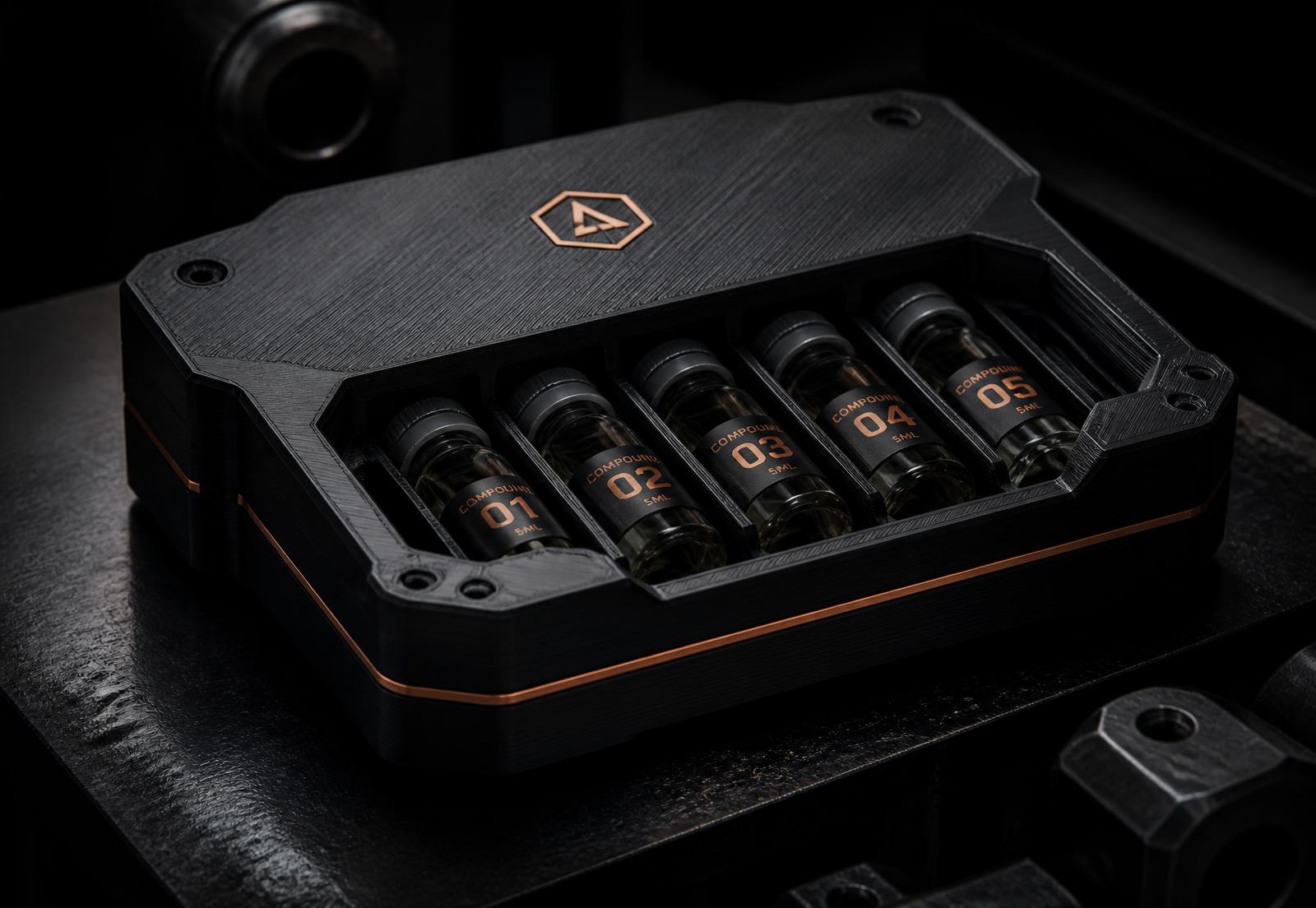
Apex Forged began with a specific failure: a rack of research vials in a cardboard tray, unlabeled, shifting in transit. Everything downstream of that tray — the record keeping, the chain of custody, the integrity of the material — depended on packaging that had been treated as an afterthought.
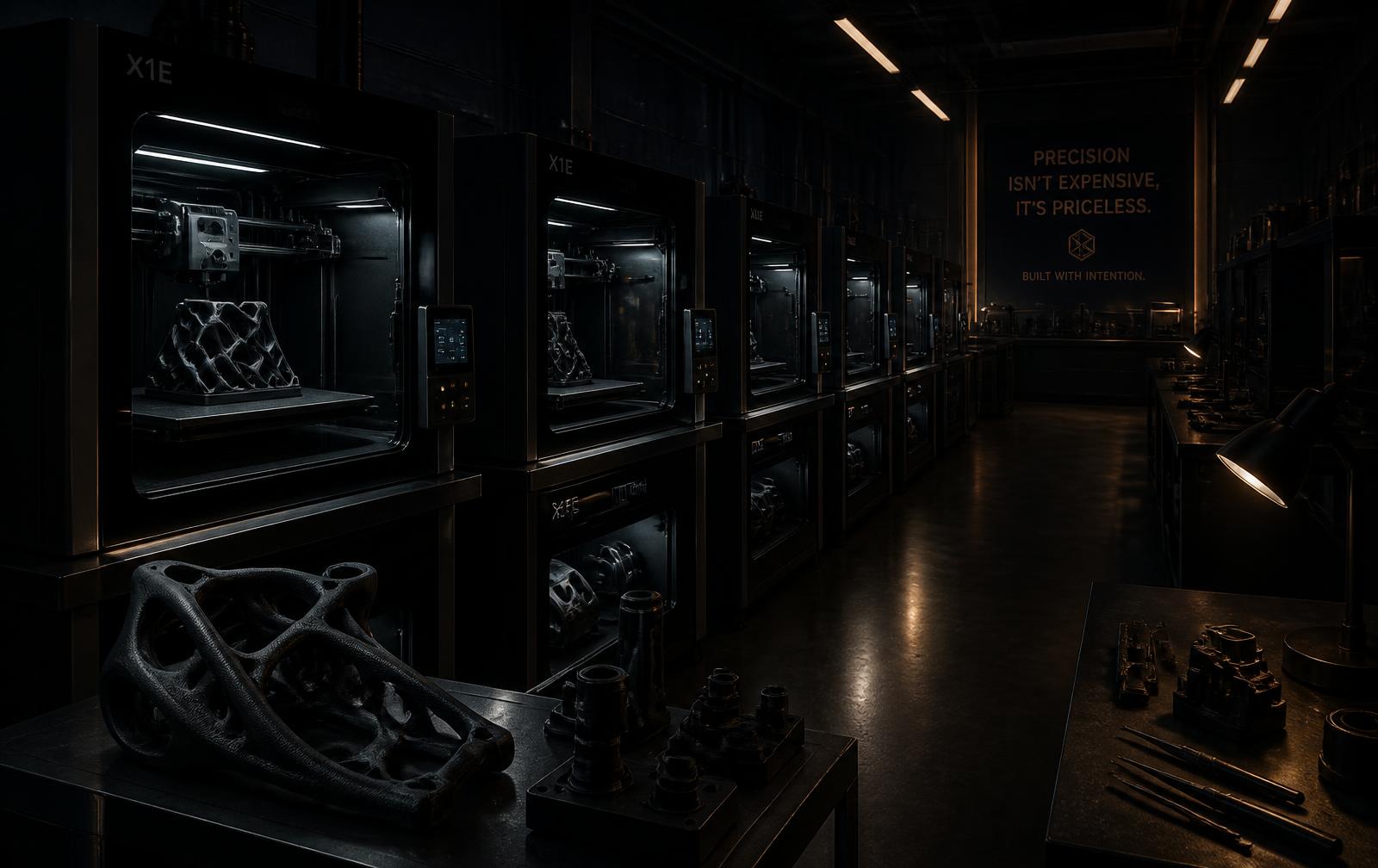
We build the opposite. Every case starts as a parametric model dimensioned around the vial it protects, then goes through print trials until the bores, gaskets and threads land inside tolerance on the first attempt. Nothing ships that has not been gauge-checked against the source geometry.
Our materials are chosen for behavior, not appearance. Carbon-reinforced PA12 and PETG-CF hold dimension through cold-storage cycling and resist the solvents that live on a bench. Finishes are matte and forged-textured because a case is an instrument, not a display piece.
The system is deliberately modular. A single Sentinel capsule shares its desiccant bay standard with the Expedition travel case; Ordnance racks dovetail into arrays without hardware. Inventory can grow without replacing what already works.
What we do not do
Apex Forged manufactures storage hardware exclusively. We do not sell, supply, distribute or broker peptides, compounds or any chemical or biological substance, and we make no medical, therapeutic or diagnostic claims of any kind. All products are for research and laboratory organization only.